- Ten minutes undoes hours in the saddle. A road bike holds your hips bent, lower back rounded and neck tipped back: the hip is flexed 65 to 90 degrees at the top of each pedal stroke, and the knee never straightens past 25 to 35 degrees [1].
- If you ache, you are in good company. 58% of professional road cyclists had low back pain within a year [2]; among recreational riders the neck (48.8%) and knees (41.7%) came first [3].
- Fit the bike, stretch the rider. In a randomised trial, a 3D bike fit left riders with less pain, most of all in the groin and back [4].
- Tight hamstrings are not your fate. Road cyclists were more flexible than non-cyclists in one study [5]. About a third of trained riders are tight anyway [6], and a daily stretch is for them.
- Move before, hold after. Dynamic stretching lifts performance by about 1.3% [7]. After the ride, hold each stretch 15 to 30 seconds, two to four times, at least two to three days a week [8].
- The prize is range, not next-day soreness [9]. Stretching gives back the range the bike never uses; glute and trunk strength lets you keep it.
- FlexBuddy® makes the key stretch easy: spine long, hamstrings and calves at the full length the pedal stroke never gives them.
What the bike does to your body
Hips that never open
Walking and running take the thigh behind the body on every step. Pedalling never does. The knee travels from roughly 110 degrees of bend at the top of the stroke to 25 to 35 at the bottom, and the hip moves through about 55 degrees [1]. The hip is flexed 65 to 90 degrees at the top [1], so it is still bent at the bottom. Your hip flexors work short the whole time: the iliopsoas, running from the lumbar spine and the inside of the pelvis to the top of the femur, and the rectus femoris, the one quadriceps muscle that crosses the hip as well as the knee [10].
In adults, active people who sat little had 6.1 degrees more passive hip extension than inactive people who sat over seven hours a day [11]. Ride for three hours, sit at a desk for eight, and your hips have barely opened all day. The first stretch below goes straight to that. The tight hips from sitting pillar covers the desk hours.
Hamstrings that never reach full length
The hamstrings are three muscles on the back of the thigh that run from the ischial tuberosity, the sitting bone, to just below the knee; they extend the hip and bend the knee [12]. They reach full length only when the hip is flexed and the knee straight at the same moment. On the bike that never happens: when the hip is most flexed the knee is deeply bent, and by the time the knee is at its straightest the hip has opened [1]. With the glutes and quadriceps they are prime movers of the pedal stroke [1], so they work hard, always in mid range. Full length is your job, and it takes two minutes.
A rounded lower back and a tipped-back neck
Road-bike posture is mild flexion of the lumbar and thoracic spine with moderate extension of the neck [1]. In elite and master cyclists, the lumbar spine went from its inward standing curve to a flexed one at every handlebar position tested [13]. Lower, more distant handlebars mean more lumbar flexion, and the upper back rounds further as the ride goes on [14]. To see the road from there you tip your head back, and hold it. A fine position for riding. It simply needs undoing afterwards.
What do cyclists actually complain about?
- Professionals. In seven professional teams, 58% of riders had had low back pain in the previous 12 months and 36% pain at the front of the knee [2].
- Recreational riders. 85% reported at least one overuse complaint: neck 48.8%, knees 41.7%, groin and buttocks 36.1%, hands 31.1%, back 30.3% [3].
- The good news. Among 21,824 entrants to the Cape Town Cycle Tour, only 2.5% reported a gradual-onset injury in a year [15].
- Reviews. One put the point prevalence of low back pain in cyclists at 10 to 60% [16]; another lists the knee, neck and shoulder, hands, buttock and perineum as the usual sites of non-traumatic cycling injury [17].
Aches are close to universal, true injuries are rare, and the same places come up every time. So the plan is simple: set the bike up well, and give your hips, back and neck ten minutes after you ride.
Lower back pain on the bike: fit the bike, then free the body
What riders with back pain have in common
Studies comparing cyclists with and without chronic low back pain on the bike agree. The first points to riders with pain flexing and rotating the lower lumbar spine more [18]. In the second, on a two-hour outdoor ride, they sat in more lower-lumbar flexion from the start [19]. A 2017 systematic review confirmed it: more lumbar flexion, imbalanced core muscle activation and poorer back extensor endurance, with lower handlebars adding to the flexion [20].
Bike fit works
An earlier review found strong evidence for one risk factor above all: saddle angle [16]. In the study behind it, club cyclists with back pain had the saddle nose tilted down 10 to 15 degrees, and more than 70% reported major improvement over six months [21][22]. In the best trial, amateur cyclists randomised to a 3D kinematic bike fit had less pain after 15 days than those given a handout of posture advice, most of all in the groin and back [4]. A 2026 systematic review of bike fitting for back pain found every study positive [22].
Where stretching fits
The fit sorts out the bike: saddle height and tilt, reach and drop to the bars. Stretching sorts out the rider. It gives your hips, hamstrings and upper back the range they never get in the saddle, so you stand straight up when you climb off instead of unfolding in stages. Add trunk endurance and you have all three. More in the tight hamstrings and lower back guide.
Do cyclists have short hamstrings, and does it matter?
Good news: cycling does not condemn you to short hamstrings. And their length matters most once you are off the bike.
- Riding does not lock them short. Compared with mountain bikers and non-cyclists, road cyclists had the greatest hamstring extensibility [5].
- A third of trained riders are tight anyway. Among 96 highly trained cyclists, 30 had reduced extensibility. Bending forward off the bike, the tight group had a rounder upper back and a pelvis that tipped less [6]. A study of 75 cyclists found the same link in deep forward bends [23].
- Riders with back pain had tighter hamstrings. In a University of Cape Town study, their straight-leg raise was about 50 degrees, against 64 in pain-free riders [24].
Tight hamstrings make your back do the bending when you lift the bike or pull off your shoes. Long hamstrings let your hips do it. And they respond to the right stretch, done often.
The six stretches for cyclists
The American College of Sports Medicine recommends static stretching after an active warm-up, at least two to three days a week, each stretch held 15 to 30 seconds and repeated two to four times [8]; its position stand sets the total at 60 seconds per exercise [25]. That dose works: in a six-week trial, 30-second hamstring holds five days a week increased range, and 60-second holds added nothing [26]. Stretch to a firm pull, never pain.
| Stretch | Targets | Hold × reps | When |
|---|---|---|---|
| Half-kneeling hip flexor with pelvic tuck | Iliopsoas, rectus femoris | 30 s × 2 per side | After rides, desk days |
| Straight-spine hamstring stretch, with FlexBuddy or a strap | Hamstrings; calves with feet flexed | 30 s × 3 | After rides, evenings |
| Figure-4 glute stretch | Gluteus maximus, piriformis | 30 s × 2 per side | After rides |
| Quadriceps stretch | Quadriceps | 30 s × 2 per side | After rides |
| Chest and thoracic opener | Chest, upper back | 30 s, then 8 to 10 slow extensions | After rides, desk days |
| Neck release and chin tuck | Side and back of the neck | 15 s per side; 10 tucks | Any time |
1. Half-kneeling hip flexor stretch with a pelvic tuck
Kneel on one padded knee, the other foot forward. Tuck the tailbone under, squeeze the buttock of the kneeling leg, and only then shift the hips forward a few centimetres. The pull belongs at the front of the hip, not the lower back. The tuck is what makes it work: in a crossover trial of active adults, the tucked version reduced hip flexor resistance and the ordinary forward lunge did not [27]. The hip flexor stretch article has the full technique.
2. Straight-spine hamstring stretch
This is the riding position reversed: hips flexed, knees straight, spine long. Sit tall on the floor, legs straight, with the FlexBuddy foot bar under the soles of your feet and the other bar in both hands, or a strap or towel round your feet. Tip the pelvis forward, lift the chest and lean from the hips until the backs of the thighs pull; stop before the lower back rounds. With FlexBuddy the strap carries the pull, so your back stays long even on tired legs. Flex the feet towards you and the calves join in.
3. Figure-4 glute stretch
On your back, cross one ankle over the opposite knee and draw the lower thigh towards your chest until the buttock of the crossed leg pulls.
4. Quadriceps stretch
Standing with a hand on a wall, hold one foot and bring the heel towards the buttock. Keep the knees together and the pelvis tucked, so the rectus femoris lengthens at the hip as well as the knee [10].
5. Chest and thoracic opener
More than half of the elite and master cyclists in one study stood with an exaggerated upper-back curve (58.3% and 53.3%) [13]. Lie lengthwise on a foam roller or rolled towel, arms out in a low V, palms up. Then turn it crossways under the shoulder blades, support your head and ease the upper back over it.
6. Neck release and chin tuck
Let one ear drop towards the shoulder and hold; change sides. Then draw the chin straight back, as if making a double chin, to lengthen the back of the neck that riding keeps short. Hold five seconds.
Should you stretch before a ride or after?
Before: move, do not hold
Warm up by moving and you ride better: dynamic stretching improves performance by about 1.3% [7]. Long static holds belong after the ride: 60 seconds or more per muscle just before exercise costs about 4.6%, under 60 seconds about 1.1% [7]. In highly trained cyclists, 16 minutes of static stretching raised the oxygen cost of riding five minutes into a 30-minute effort [28]. So spin easily for five to ten minutes, and add leg swings and walking lunges if you start stiff. Twenty seconds on one stiff muscle is fine. The static versus dynamic stretching article explains why the two do different jobs.
After, or on its own: hold
After a ride the muscles are warm and nobody is asking them for power. This is when stretching pays: a 2024 meta-analysis of 77 studies found that regular stretching produces a lasting gain in range of motion, with static ahead of dynamic [29]. The extra range from one session typically fades within 30 minutes [7], so the habit beats the timing. You will feel it from the first session: legs lighter, back longer, hips open.
Off-bike strength: how to keep the range you gain
Stretching gives you the range. Strength lets you hold a good position for three hours. Cyclists with low back pain had poorer back extensor endurance and thinner deep trunk muscles [20]. In competitive cyclists, tiring the core before a ride raised side-to-side knee movement from about 15 to about 23 degrees [30].
Strength training is powerful injury insurance too: across 25 randomised trials in all sports it cut injuries to less than a third [31]. And across 11 trials it matched stretching for range of motion [32]. Do both.
Fifteen minutes, twice a week: single-leg glute bridges, split squats, Romanian deadlifts (hamstrings loaded at length), front and side planks, and prone back extensions. For other sports, see the stretching for athletes guide.
A 10-minute post-ride routine, and a 3-minute café-stop version
Ten minutes at home
Work down the table: hip flexors, hamstrings, glutes and quadriceps at two minutes each, then a minute for the chest and upper back and a minute for the neck. Leave FlexBuddy where you take your cycling shoes off and the habit starts itself. Short of time? Do the hamstring stretch alone: ten deep breaths, three times, about two minutes.
Three minutes at the café, standing
- Standing hip flexor: split stance, back heel lifted, tailbone tucked, back buttock squeezed. 30 seconds per side.
- Standing hamstring: one heel on a low wall with the leg straight, hinge forward from the hips with a flat back. 30 seconds per side.
- Upper body: hands clasped behind your back, chest lifted, 20 seconds; then five chin tucks and ten seconds of ear-to-shoulder each side.
If you also run, the stretching for runners guide adds the calf work.
When it is not a stretching problem
- Numb or tingling hands. Pressure on the ulnar or median nerve at the handlebar is known as cyclist's palsy. After a 600 km (about 370 mile) ride, 23 of 25 cyclists had hand symptoms [33]. The answers are padded gloves, frequent changes of hand position and a fit check.
- Saddle numbness. Genital numbness is reported by 50 to 91% of cyclists in the studies reviewed [34]. It is a pressure problem: saddle shape, tilt and height. Numbness that outlasts the ride needs a doctor.
- Knee pain. Check the saddle first. Compressive force behind the kneecap rises as the saddle goes lower, and one review suggests a height that leaves the knee bent 25 to 30 degrees at the bottom of the stroke [35]; a later systematic review covers the methods for setting it [36].
- Persistent back pain. Pain that lasts more than a few weeks, wakes you at night or travels down a leg needs a physiotherapist, ideally alongside a bike fit.

The cyclist's stretch, done properly with FlexBuddy
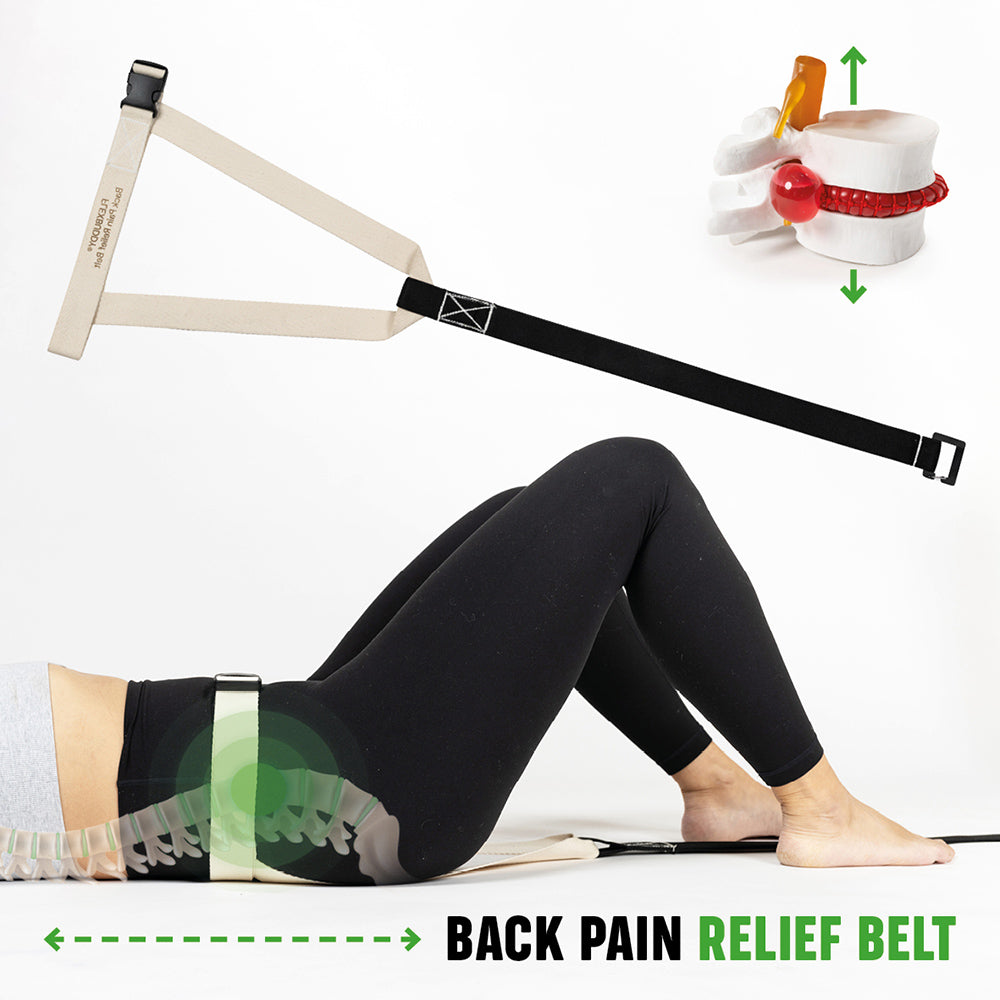
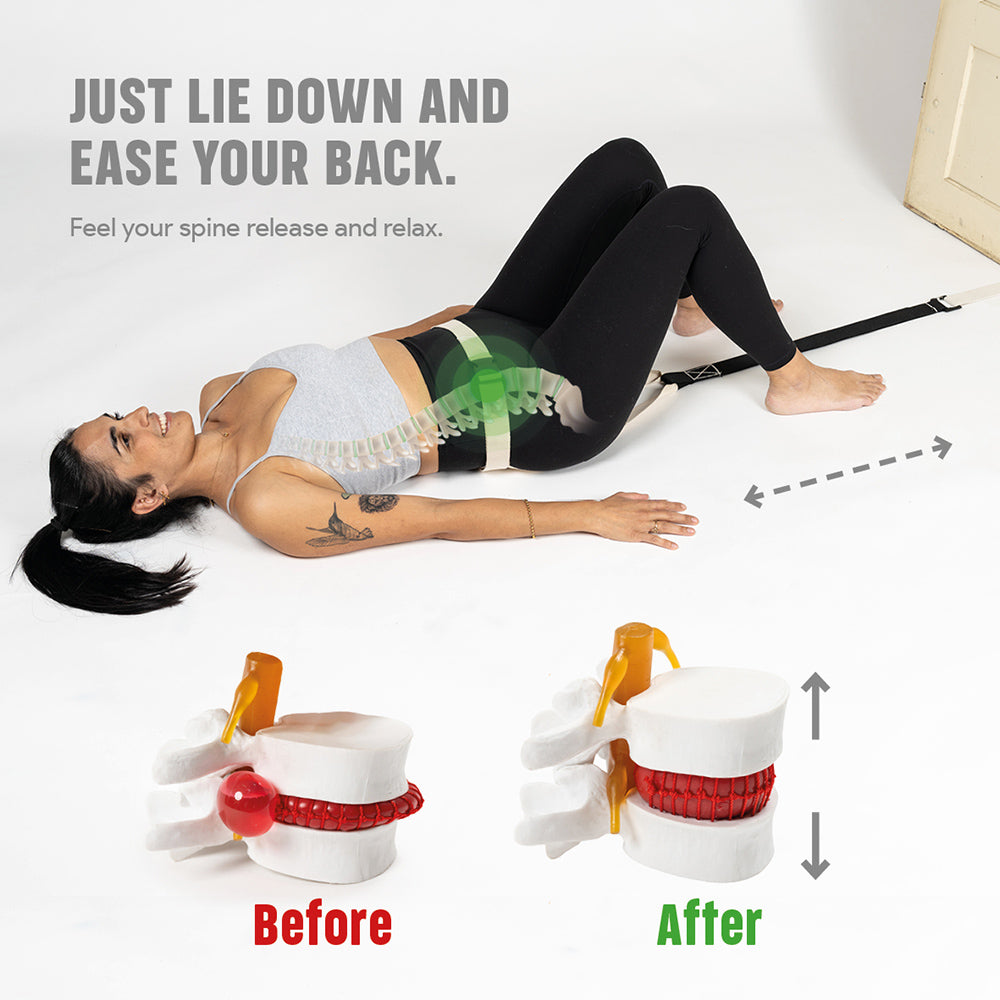
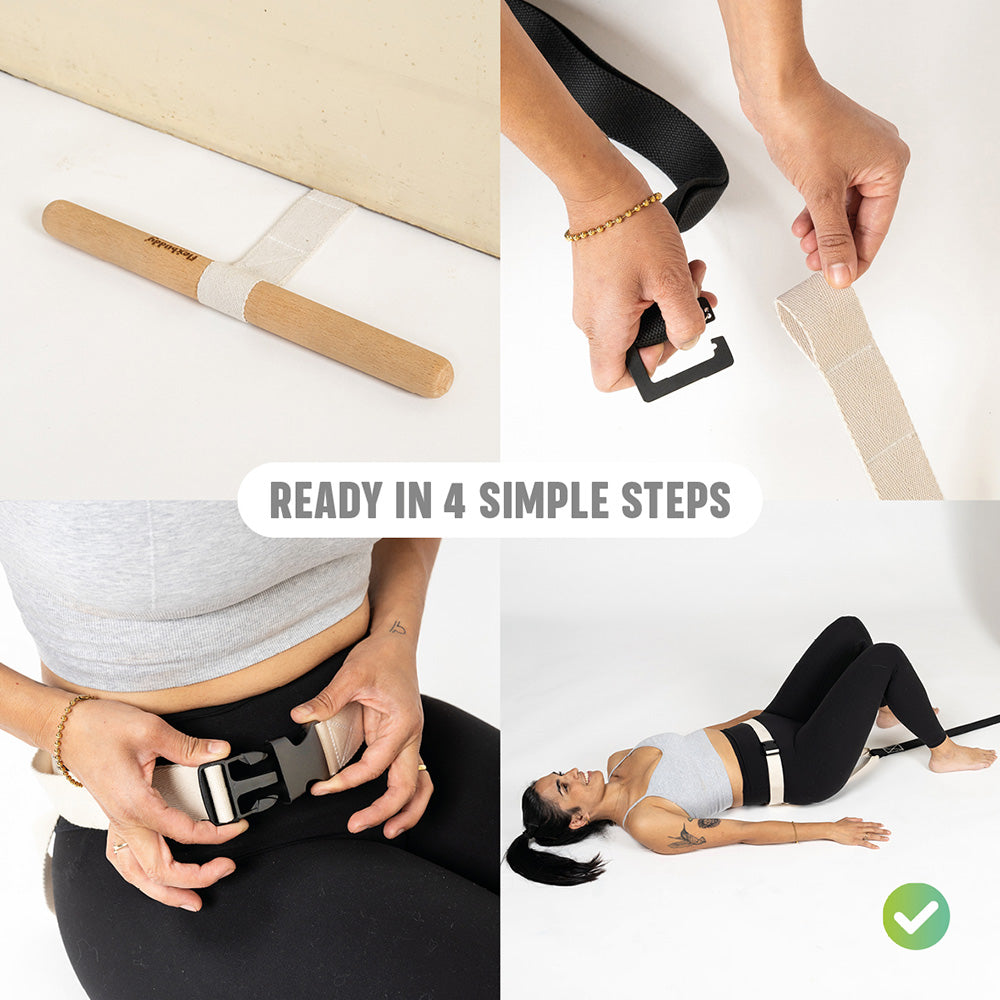
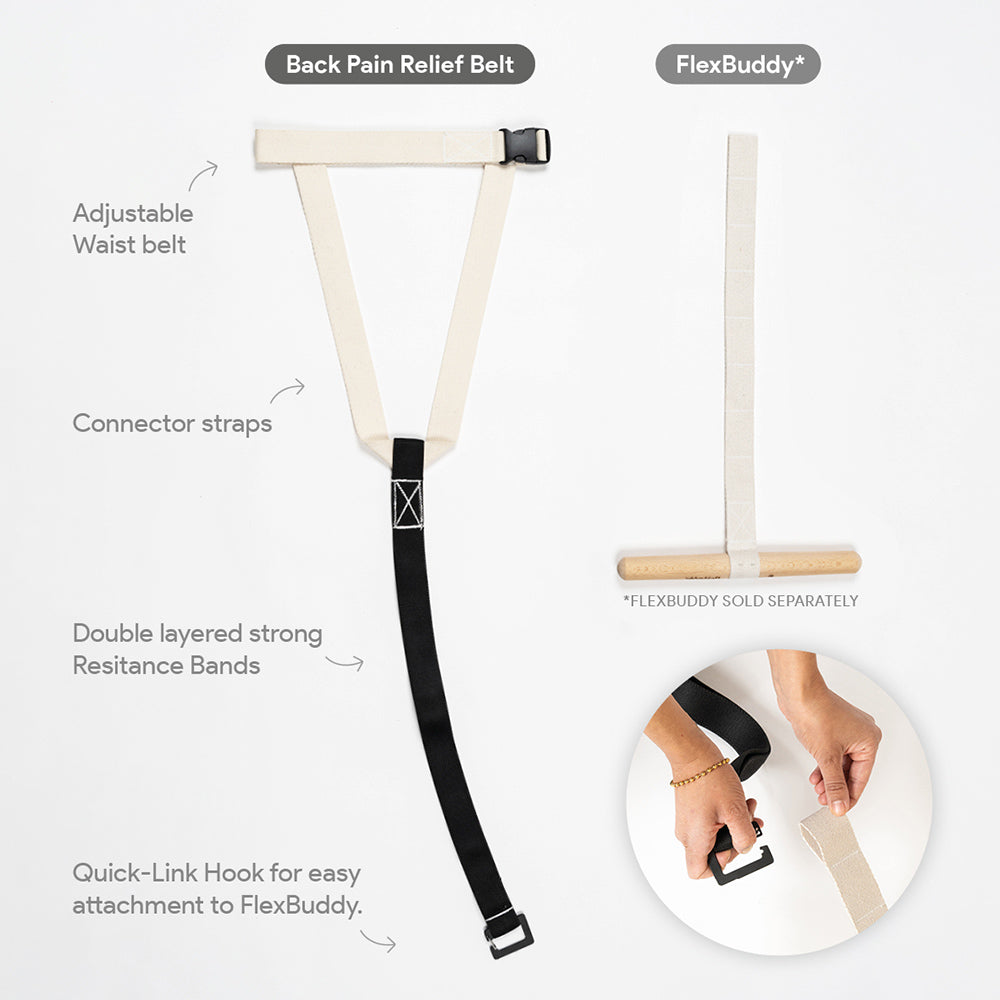
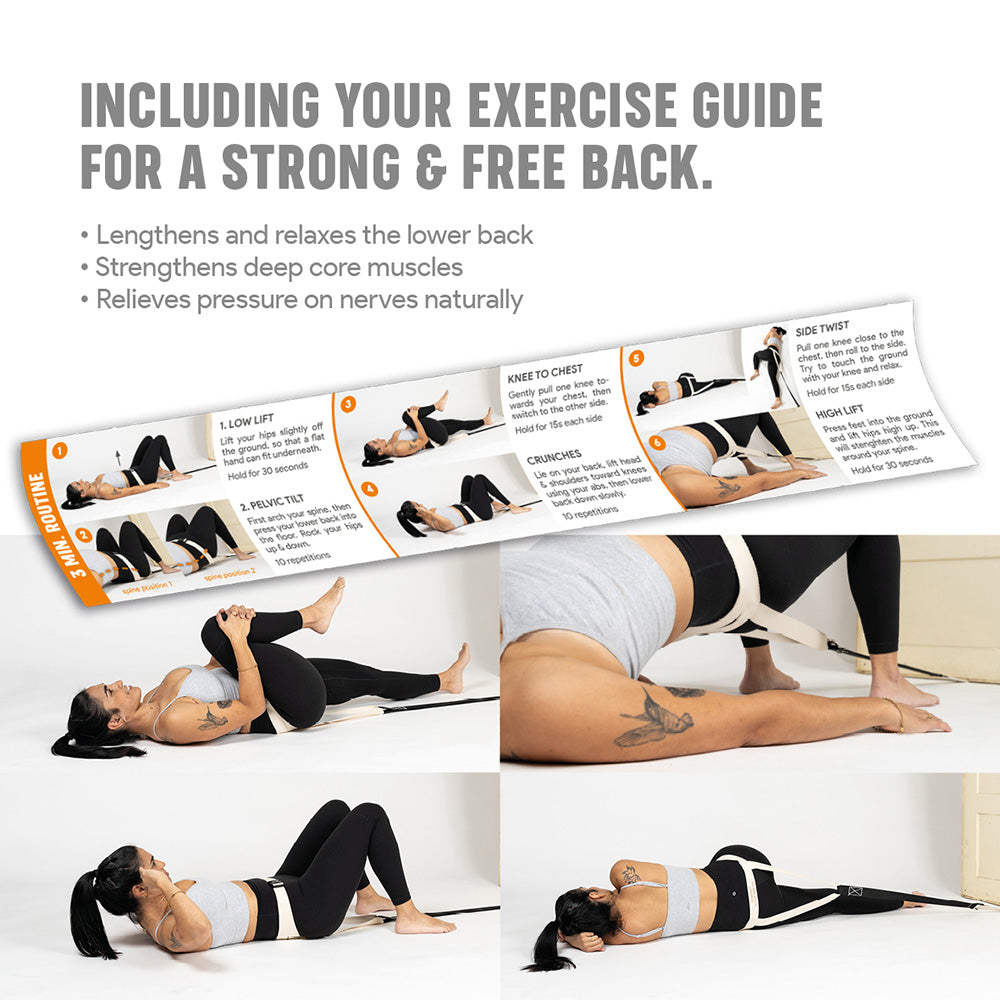
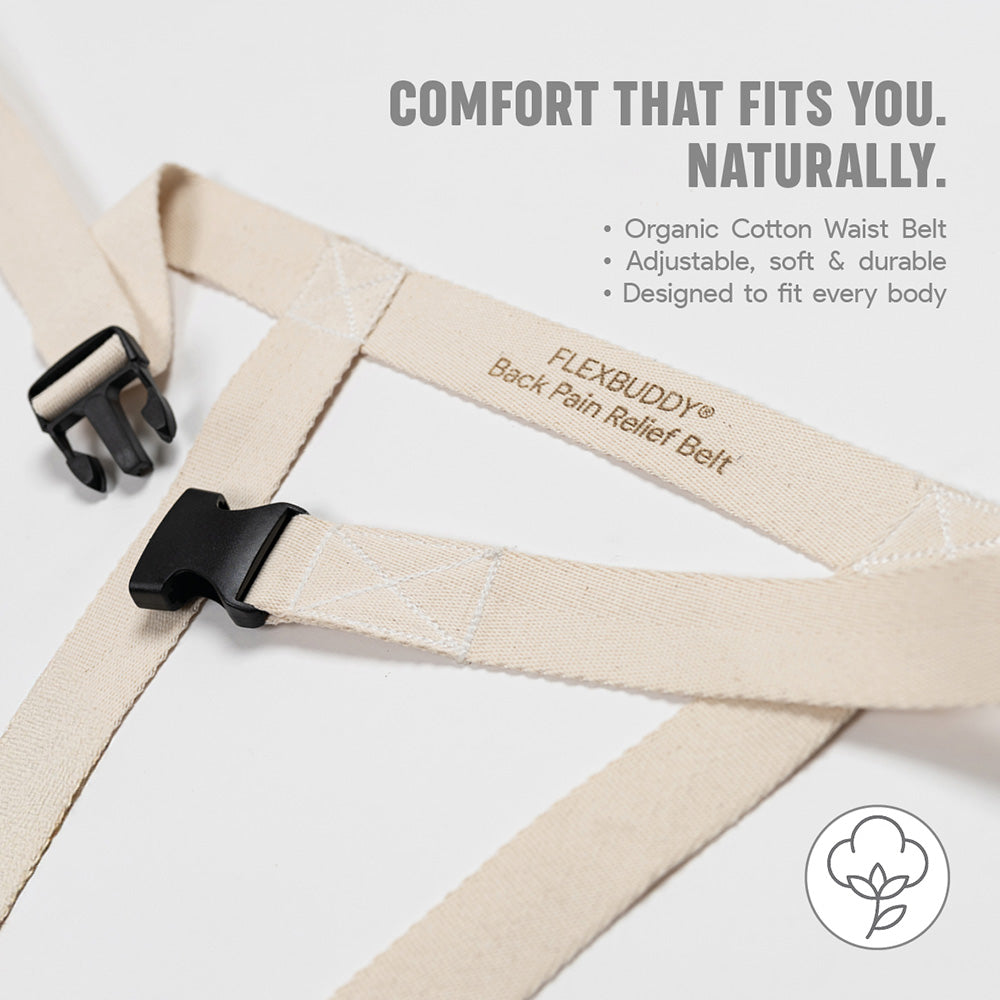
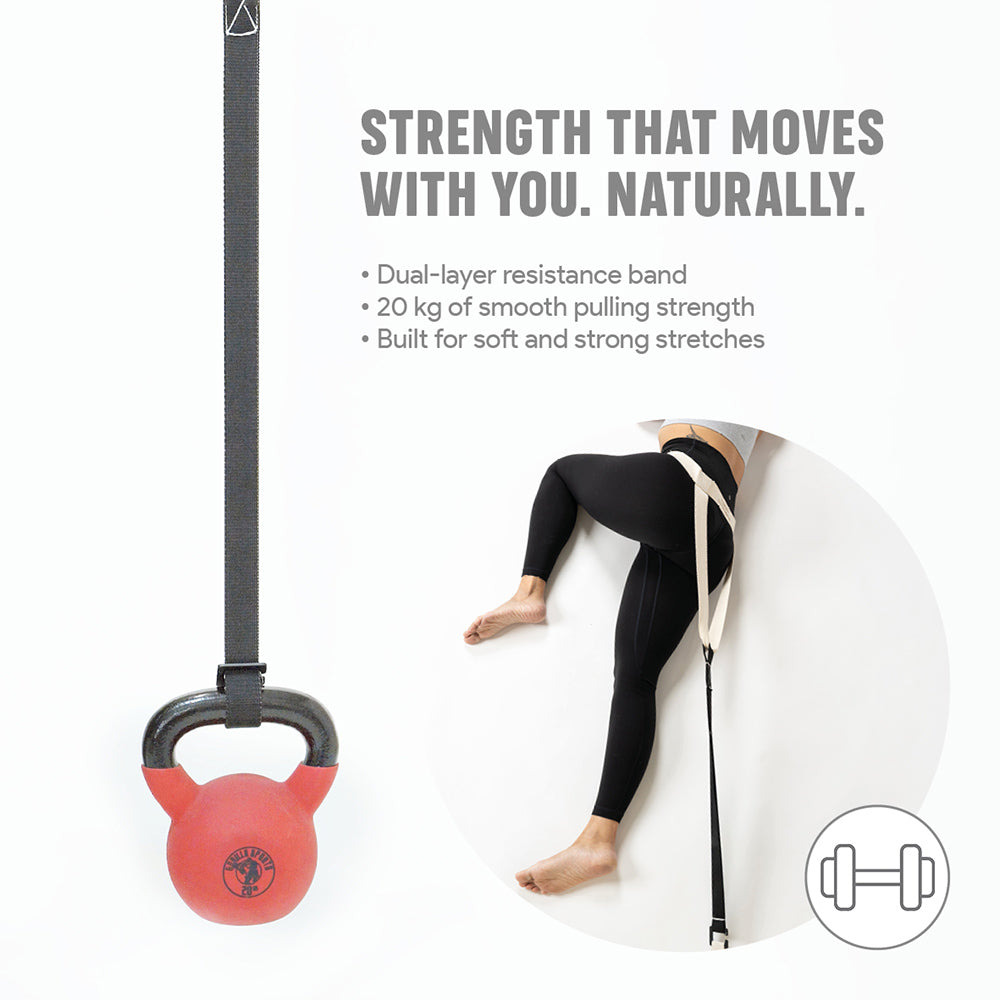
The riding position is hips bent, knees bent, spine rounded. The stretch that undoes it is hips bent, knees straight, spine long, and it is the one tired riders do worst: the hands do not reach the feet and the back rounds. FlexBuddy® solves that. It is a patented stretching device made of two beech-wood bars joined by an adjustable cotton strap. One bar sits under the soles of your feet, the other in your hands. You sit tall, lean back and tip the hips forward, and the strap carries the pull, so the stretch lands in the hamstrings and, with the feet flexed against the bar, the calves. Move the foot bar to another loop for a big change of length; roll the strap around the hand bar for a small one.
Ten deep breaths, three times, is about two minutes, and it fits in a backpack. "As a cyclist, I'm naturally overbalanced with flexibility issues in my hamstrings. At 60 I thought my hip pain wouldn't cease…" wrote Scott T., a verified buyer. FlexBuddy is rated 4.5 by verified buyers, with a 30-day money-back guarantee and a lifetime warranty. Get your FlexBuddy, or take the two-minute quiz to see where you start.
Frequently asked questions
Should cyclists stretch after a ride?
Yes. The muscles are warm, and regular static stretching produces a lasting gain in range of motion [29]. Hold 15 to 30 seconds, two to four times, at least two to three days a week [8].
What are the best stretches for cyclists?
Six cover the riding position: a tucked half-kneeling hip flexor stretch, a straight-spine hamstring stretch, a figure-4 glute stretch, a quadriceps stretch, a chest and upper-back opener, and a neck release with chin tucks. Ten minutes. FlexBuddy makes the hamstring one easy to do well.
Why are my hamstrings so tight from cycling?
Pedalling works them hard in mid range and never takes them to full length: the hip is never deeply flexed while the knee is straight [1]. About a third of one highly trained group were tight [6]. The straight-spine hamstring stretch gives them the length the bike never does.
Does cycling make your hip flexors tight?
It keeps them short for hours. The hip stays flexed through the whole pedal stroke [1], and long sitting with little activity is linked to less hip extension [11]. The tucked half-kneeling stretch is the one to do [27].
How do I stop lower back pain when cycling?
Start with the bike: saddle height and tilt, reach and drop to the bars. In a randomised trial a 3D bike fit reduced back pain more than posture advice [4]. Then build the trunk endurance that cyclists with back pain tend to lack [20], and stretch hips and hamstrings after every ride. See a physiotherapist if pain persists.
Should I stretch before cycling?
Warm up by moving. A dynamic warm-up slightly improves performance, while long static holds just before exercise reduce it by a few per cent [7]. Spin easily for five to ten minutes and save the static stretches for afterwards.
This article is general information, not medical advice. Tight muscles usually respond well to regular stretching. If your pain is sharp, radiates down a leg, comes with numbness, weakness, fever, bladder or bowel changes, follows an injury, or keeps getting worse, see a doctor or physiotherapist before you stretch.
References
- Wadsworth DJS, Weinrauch P. The role of a bike fit in cyclists with hip pain. A clinical commentary. Int J Sports Phys Ther. 2019;14(3):468–486. doi:10.26603/ijspt20190468. PMID 31681505; PMC6818133. https://pmc.ncbi.nlm.nih.gov/articles/PMC6818133/ (accessed 10 Nov 2026).
- Clarsen B, Krosshaug T, Bahr R. Overuse injuries in professional road cyclists. Am J Sports Med. 2010;38(12):2494–2501. doi:10.1177/0363546510376816. PMID 20847225.
- Wilber CA, Holland GJ, Madison RE, Loy SF. An epidemiological analysis of overuse injuries among recreational cyclists. Int J Sports Med. 1995;16(3):201–206. doi:10.1055/s-2007-972992. PMID 7649713.
- Dias Scoz R, Rui de Oliveira P, Chamorro Pelegrina C Junior, et al. Effectiveness of a 3D bikefitting method in riding pain, fatigue, and comfort: a randomized controlled clinical trial. Sports Biomech. 2025;24(3):624–637 (Epub 2022). doi:10.1080/14763141.2022.2140701. PMID 36408812.
- Muyor JM, Zabala M. Road cycling and mountain biking produces adaptations on the spine and hamstring extensibility. Int J Sports Med. 2016;37(1):43–49. doi:10.1055/s-0035-1555861. PMID 26509372.
- Muyor JM, Alacid F, López-Miñarro PA. Influence of hamstring muscles extensibility on spinal curvatures and pelvic tilt in highly trained cyclists. J Hum Kinet. 2011;29:15–23. doi:10.2478/v10078-011-0035-8. PMID 23486997; PMC3588616.
- Behm DG, Blazevich AJ, Kay AD, McHugh M. Acute effects of muscle stretching on physical performance, range of motion, and injury incidence in healthy active individuals: a systematic review. Appl Physiol Nutr Metab. 2016;41(1):1–11. doi:10.1139/apnm-2015-0235. PMID 26642915.
- Page P. Current concepts in muscle stretching for exercise and rehabilitation. Int J Sports Phys Ther. 2012;7(1):109–119. PMID 22319684; PMC3273886. https://pmc.ncbi.nlm.nih.gov/articles/PMC3273886/ (accessed 10 Nov 2026).
- Herbert RD, de Noronha M, Kamper SJ. Stretching to prevent or reduce muscle soreness after exercise. Cochrane Database Syst Rev. 2011;(7):CD004577. doi:10.1002/14651858.CD004577.pub3. PMID 21735398.
- Jones O. Muscles of the Anterior Thigh. TeachMeAnatomy, last updated 11 Oct 2026. https://teachmeanatomy.info/lower-limb/muscles/thigh/anterior-compartment/ (accessed 10 Nov 2026).
- Boukabache A, Preece SJ, Brookes N. Prolonged sitting and physical inactivity are associated with limited hip extension: a cross-sectional study. Musculoskelet Sci Pract. 2021;51:102282. doi:10.1016/j.msksp.2020.102282. PMID 33188982.
- Jones O. Muscles of the Posterior Thigh: Hamstrings. TeachMeAnatomy, last updated 9 Apr 2026. https://teachmeanatomy.info/lower-limb/muscles/thigh/hamstrings/ (accessed 10 Nov 2026).
- Muyor JM, López-Miñarro PA, Alacid F. Spinal posture of thoracic and lumbar spine and pelvic tilt in highly trained cyclists. J Sports Sci Med. 2011;10(2):355–361. PMID 24149883; PMC3761866.
- Antequera-Vique JA, Oliva-Lozano JM, Muyor JM. Effects of cycling on the morphology and spinal posture in professional and recreational cyclists: a systematic review. Sports Biomech. 2023;22(4):567–596. doi:10.1080/14763141.2022.2058990. PMID 35440291.
- du Toit F, Schwellnus M, Wood P, Swanevelder S, Killops J, Jordaan E. Epidemiology, clinical characteristics and severity of gradual onset injuries in recreational road cyclists: a cross-sectional study in 21,824 cyclists (SAFER XIII). Phys Ther Sport. 2020;46:113–119. doi:10.1016/j.ptsp.2020.08.006. PMID 32911361.
- Marsden M, Schwellnus M. Lower back pain in cyclists: a review of epidemiology, pathomechanics and risk factors. Int SportMed J. 2010;11(1):216–225. https://journals.co.za/content/ismj/11/1/EJC48389 (not indexed in PubMed; abstract read via the OpenAlex record https://openalex.org/W1579859533, accessed 10 Nov 2026).
- Dettori NJ, Norvell DC. Non-traumatic bicycle injuries: a review of the literature. Sports Med. 2006;36(1):7–18. doi:10.2165/00007256-200636010-00002. PMID 16445308.
- Burnett AF, Cornelius MW, Dankaerts W, O'Sullivan PB. Spinal kinematics and trunk muscle activity in cyclists: a comparison between healthy controls and non-specific chronic low back pain subjects, a pilot investigation. Man Ther. 2004;9(4):211–219. doi:10.1016/j.math.2004.06.002. PMID 15522646.
- Van Hoof W, Volkaerts K, O'Sullivan K, Verschueren S, Dankaerts W. Comparing lower lumbar kinematics in cyclists with low back pain (flexion pattern) versus asymptomatic controls: field study using a wireless posture monitoring system. Man Ther. 2012;17(4):312–317. doi:10.1016/j.math.2012.02.012. PMID 22436688.
- Streisfeld GM, Bartoszek C, Creran E, Inge B, McShane MD, Johnston T. Relationship between body positioning, muscle activity, and spinal kinematics in cyclists with and without low back pain: a systematic review. Sports Health. 2017;9(1):75–79. doi:10.1177/1941738116676260. PMID 27784817; PMC5315261.
- Salai M, Brosh T, Blankstein A, Oran A, Chechik A. Effect of changing the saddle angle on the incidence of low back pain in recreational bicyclists. Br J Sports Med. 1999;33(6):398–400. doi:10.1136/bjsm.33.6.398. PMID 10597848; PMC1756210.
- Barrajón C, Legaz-Arrese A, Cirer-Sastre R, López-Laval I, Sitko S. Effects of bike-fitting on lower back pain in cyclists: a systematic review. Cureus. 2026;18(1):e101718. doi:10.7759/cureus.101718. PMID 41705012; PMC12907770.
- Muyor JM, López-Miñarro PA, Alacid F. The relationship between hamstring muscle extensibility and spinal postures varies with the degree of knee extension. J Appl Biomech. 2013;29(6):678–686. doi:10.1123/jab.29.6.678. PMID 23343818.
- Marsden M. The epidemiology and risk factors associated with lower back pain in cyclists [MPhil dissertation]. University of Cape Town; 2009. http://hdl.handle.net/11427/12114 (accessed 10 Nov 2026).
- Garber CE, Blissmer B, Deschenes MR, et al.; American College of Sports Medicine. Position stand: quantity and quality of exercise for developing and maintaining cardiorespiratory, musculoskeletal, and neuromotor fitness in apparently healthy adults. Med Sci Sports Exerc. 2011;43(7):1334–1359. doi:10.1249/MSS.0b013e318213fefb. PMID 21694556.
- Bandy WD, Irion JM, Briggler M. The effect of time and frequency of static stretching on flexibility of the hamstring muscles. Phys Ther. 1997;77(10):1090–1096. doi:10.1093/ptj/77.10.1090. PMID 9327823.
- González-de-la-Flor Á, Cotteret C, García-Pérez-de-Sevilla G, Domínguez-Balmaseda D, Del-Blanco-Muñiz JÁ. Comparison of two different stretching strategies to improve hip extension mobility in healthy and active adults: a crossover clinical trial. BMC Musculoskelet Disord. 2024;25(1):853. doi:10.1186/s12891-024-07988-9. PMID 39462416; PMC11515218.
- Wolfe AE, Brown LE, Coburn JW, Kersey RD, Bottaro M. Time course of the effects of static stretching on cycling economy. J Strength Cond Res. 2011;25(11):2980–2984. doi:10.1519/JSC.0b013e318234e55f. PMID 21904241.
- Konrad A, Alizadeh S, Daneshjoo A, et al. Chronic effects of stretching on range of motion with consideration of potential moderating variables: a systematic review with meta-analysis. J Sport Health Sci. 2024;13(2):186–194. doi:10.1016/j.jshs.2023.06.002. PMID 37301370; PMC10980866.
- Abt JP, Smoliga JM, Brick MJ, Jolly JT, Lephart SM, Fu FH. Relationship between cycling mechanics and core stability. J Strength Cond Res. 2007;21(4):1300–1304. doi:10.1519/R-21846.1. PMID 18076271.
- Lauersen JB, Bertelsen DM, Andersen LB. The effectiveness of exercise interventions to prevent sports injuries: a systematic review and meta-analysis of randomised controlled trials. Br J Sports Med. 2014;48(11):871–877. doi:10.1136/bjsports-2013-092538. PMID 24100287.
- Afonso J, Ramirez-Campillo R, Moscão J, et al. Strength training versus stretching for improving range of motion: a systematic review and meta-analysis. Healthcare (Basel). 2021;9(4):427. doi:10.3390/healthcare9040427. PMID 33917036; PMC8067745.
- Patterson JM, Jaggars MM, Boyer MI. Ulnar and median nerve palsy in long-distance cyclists. A prospective study. Am J Sports Med. 2003;31(4):585–589. doi:10.1177/03635465030310041801. PMID 12860549.
- Leibovitch I, Mor Y. The vicious cycling: bicycling related urogenital disorders. Eur Urol. 2005;47(3):277–286. doi:10.1016/j.eururo.2004.10.024. PMID 15716187.
- Bini R, Hume PA, Croft JL. Effects of bicycle saddle height on knee injury risk and cycling performance. Sports Med. 2011;41(6):463–476. doi:10.2165/11588740-000000000-00000. PMID 21615188.
- Bini R, Priego-Quesada J. Methods to determine saddle height in cycling and implications of changes in saddle height in performance and injury risk: a systematic review. J Sports Sci. 2022;40(4):386–400. doi:10.1080/02640414.2021.1994727. PMID 34706617.